The Mountains Are Calling: Tourists and the Unmaking of Yosemite National Park
Excerpt from The Mountains Are Calling: Tourists and the Unmaking of Yosemite National Park by Michael W. Childers.
Excerpt from The Mountains Are Calling: Tourists and the Unmaking of Yosemite National Park by Michael W. Childers.
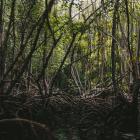
A woman returns to her ancestral home, where mangroves speak memory, loss, and land history long buried.
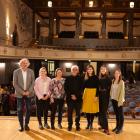
In the fall of 2024, Amitav Ghosh visited the Rachel Carson Center for Environment and Society as part of the project “One Book—Many Worlds: Munich Reads Gun Island by Amitav Ghosh.” This exhibition emerges from the multifaceted discussion of climate change and its challenges conducted in the “One Book—Many Worlds” project and grapples with the question of the role of literary fiction in interdisciplinary academic exchange and climate communication beyond academia. Taking Amitav Ghosh’s recent writings on the global climate crisis, in particular the novel Gun Island, as a vantage point, the chapters in this exhibition engage with various aspects Gun Island from different disciplinary perspectives, drawing on storylines and narrative elements that allow a multifocal engagement with different social and ecological repercussions of climate change. Additionally, pieces from the spring 2025 taumelnd trauen, verschlungen bleiben student exhibition and winning and honorable mentions from the 2025 “Tell the Untold!” writing competition take the provocation to think creatively about the past and future of our environment and world further. Thereby, the exhibition chapters create a web of diverse thoughts on and readings of the role of storytelling for the contemporary interlinked social and environmental crises from a number of perspectives.
About This Exhibition
In this Springs article, Elin Kelsey reflects on how she first started to sleep outside, and how it brought her closer to her environment.
Donald Hughes on biodiversity. This is an entry in the KTH EHL VideoDictionary.
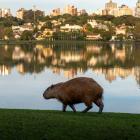
Ismaning Reservoir: A Wastewater Lake changes its Feathers? At the Ismaning Reservoir, approximately an hour by bike northeast of Marienplatz, the interplay between humans and nature is evident. It is not possible to swim in the lake. But it does more than just store water for Munich’s power generation facilities. It also provides a habitat for many species.
Ecopolis München 2019: Environmental Stories of Discovery is an exhibition on Munich’s environmental histories. It showcases the final projects of students in the Environmental Studies Certificate Program of the Rachel Carson Center for Environment and Society. The stories told in this exhibition ask: to whom does the urban world belong and what do we want the urban environment of the future to look like?


The chapter of the “Wilderness Babel” exhibition, written by historian Unnur Karlsdóttir, analyzes the Icelandic notion of wilderness which refers to the natural landscape as a space, as a visual experience, sublime and aesthetic.
What does wilderness mean in your language? Listen to words for “wilderness” and learn about their political and historical meanings in different regional contexts. “Wilderness Babel” is a collaboration with the Institute of Evolutionary Biology and Environmental Studies at the University of Zurich, edited by Marcus Hall and Wilko Graf von Hardenberg. Its international contributions are still growing.
This version 2, published in 2020, includes minor updates to the original 2013 virtual exhibition (view PDF here) and applies the Environment & Society Portal’s responsive layout.
Marcus Hall and Wilko Graf von Hardenberg, eds.
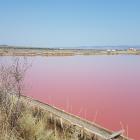
In this chapter from the virtual exhibition “Global Environments: A 360º Visual Journey,” Anna Antonova’s 360º video immerses the viewer in a unique habitat on the Bulgarian coast of the Black Sea: the salt flats in the Atanasovsko Lake near the city of Burgas. She considers these salt flats a natural symbiosis between humans and their coastal environment, which support traditional human labor, industry, and health while simultaneously providing critical avian and aquatic ecosystem habitats.
Communicating global environmental issues in new and exciting ways can lead to a better public understanding of academic research. The international doctoral researchers of the ENHANCE Innovative Training Network (ITN) present their interdisciplinary projects through short, immersive videos, accompanied by analytical contextualization. These six 360º videos and one multiple-screen video triptych, shot in different countries and ecosystems, aim to bring people closer to an in situ experience of global environments, their complexities, and our relationship to them.
ENHANCE ITN
Through a collection of 445 photographs taken from precisely the same places at intervals of months, years and decades,Die Zeit des Waldes [The forest over time] offers a stop-action look at the diversity of transformations within Germany’s forests.
The author argues that the uncritical acceptance of the idea “invasions” of introduced organisms are the “second greatest threat” to species extinction exemplifies confirmation bias in scientific advocacy.